
How we train our dogs
Training an assistance dog takes time, care, and understanding. We build confidence and resilience through positive, reward-based methods tailored to each dog.
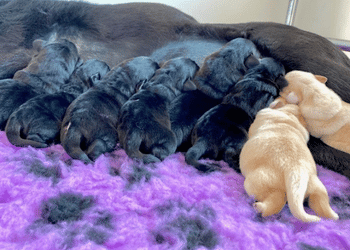
In the nest
From their earliest weeks, our puppies are gently introduced to people, sounds, and new environments. They’re given positive human interactions, including hand feeding, and are carefully socialised with other dogs. These early experiences develop confidence, resilience, and calm behaviour that underpin future assistance training.
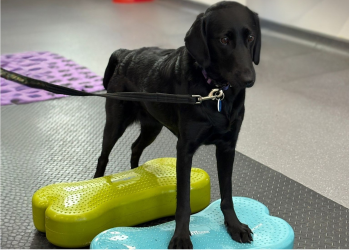
Puppy training
From eight weeks to around 14 months, our puppies live with a dedicated Puppy Training Volunteer. They attend weekly trainer-led classes and practise daily at home, learning their name and core skills such as touch, tug, and retrieve. They’re taught to settle in public spaces and stay calm in new situations.
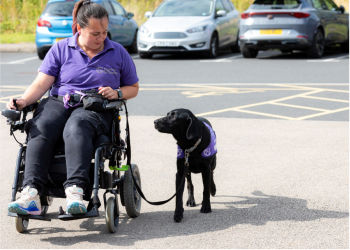
Assistance dog training
At around 14 months, our dogs begin more formal training. The core touch, tug, and retrieve skills are developed into practical tasks such as opening doors, retrieving items, and pressing buttons. They’re introduced to mobility aids and continue building resilience, visiting local towns, shops, and busy public environments.
Partner training and support
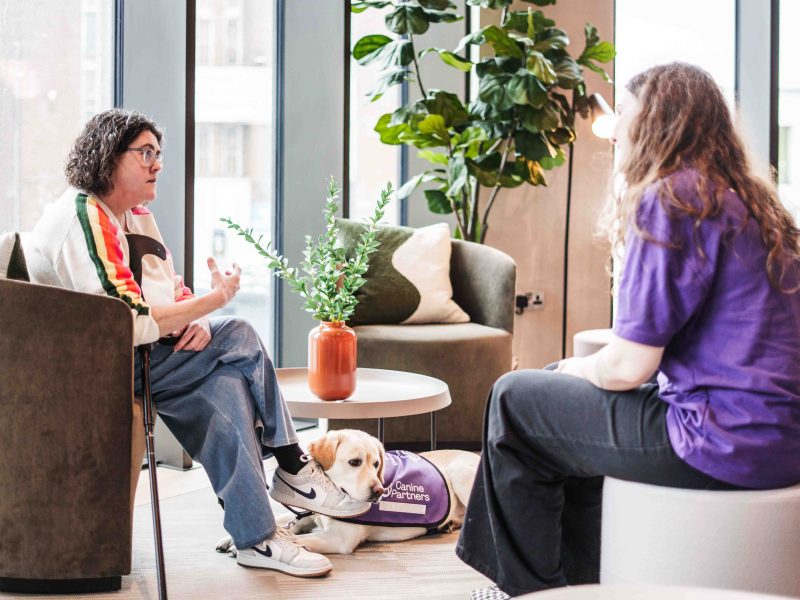
When ready, each dog is carefully matched with an applicant based on their needs, personality, and lifestyle. The new partnership then takes part in a two-week residential course at our National Training Centre. Our team provides ongoing support and welfare guidance throughout the dog’s working life and retirement.